Capitalism · Classical Liberalism · Free Markets

Judge ideas
by their results.

Why the debt reaches €3.3 trillion, why your pension is wobbling, why too much tax ends up raising less. Economic mechanisms taken apart — real numbers, sources in the open, and the costs never hidden.

01 — Fundamentals

The ten pillars of liberalism

The founding concepts of liberal thought, explained rigorously and as clearly as possible. Each one is a pillar of liberalism in its own way.

The full guide

Scroll

01 Adam Smith · 1776

The invisible hand

Everyone pursues their own interest; the result, willed by no one, is an order that benefits all. The baker does not feed you out of kindness, but out of self-interest — and there you are, fed.
02 David Ricardo · 1817

Comparative advantage

Even a country less productive at everything gains by specializing and trading. The mathematical proof that underpins free trade — unrefuted by two centuries.

03 Friedrich Hayek · 1945

Spontaneous order

Language, law, prices, money: institutions of dizzying complexity, designed by no one. No central brain can replace the dispersed knowledge of millions of individuals.

04 Ludwig von Mises · 1920

Economic calculation

Without market prices, it is impossible to know what is scarce and worth producing. Mises wrote it in 1920; the Soviet collapse confirmed it seventy years later.

05 Joseph Schumpeter · 1942

Creative destruction

Progress destroys what it replaces: jobs, firms, rents. The engine of capitalism is also its human cost — real, and to be faced honestly.

02 — Understand

Interactive explainers

Key economic mechanisms explained with data, visualisations and simulations. Concrete, visual, and straight to the point.

All explainers

The stance

An idea is not worth its intentions, but its effects. Here we don't pit camps against each other: we explain mechanisms — backed by numbers, sources in the open, and the costs never hidden.

“Between a bad and a good economist this constitutes the whole difference — the one takes account of the visible effect; the other takes account both of the effects which are seen and those which it is necessary to foresee.”

Frédéric Bastiat  ·  That Which Is Seen, and That Which Is Not Seen, 1850

03 — Thinkers

The great thinkers

The economists, philosophers and essayists who shaped modern liberal thought, from Smith to Sowell.

04 — Practitioners

The great political figures

The leaders who applied — with their successes and limits — free-market principles. Scroll: the globe stops on each country.

Scroll

🇬🇧 United Kingdom · 01 / 06
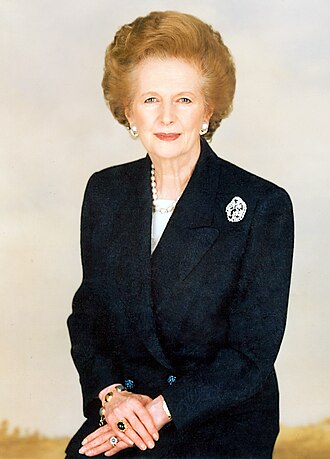
Margaret Thatcher Margaret Thatcher 1979 — 1990

Disinflation, massive privatizations, union reform — a durable structural recovery, at the cost of real, still-debated social costs.

🇺🇸 United States · 02 / 06
Ronald Reagan Ronald Reagan 1981 — 1989

Reaganomics: massive tax cuts, deregulation, and a decisive diplomacy in ending the Cold War.

🇦🇷 Argentina · 03 / 06
Javier Milei Javier Milei 2023 —

Libertarian economist elected president: dollarization, cutting the State, and a first budget surplus after decades of chronic inflation.

🇩🇪 Germany · 04 / 06
Ludwig Erhard Ludwig Erhard 1949 — 1963

Architect of the Wirtschaftswunder: the abrupt lifting of price controls in 1948 triggered the West German economic miracle.

🇸🇬 Singapore · 05 / 06
Lee Kuan Yew Lee Kuan Yew 1959 — 1990

In thirty years, a poor city-state becomes one of the world's most prosperous nations per capita — total openness, rule of law, light taxation.

🇨🇿 Czechia · 06 / 06
Václav Klaus Václav Klaus 1992 — 2013

The post-communist transition by mass privatization — one of the fastest and least unequal in the former Soviet bloc.